
Roofing guides

Parts of a Roof: A Labeled Diagram and Plain-English Guide
What are the parts of a roof called? A labeled roof diagram, the roof layers under your shingles, the parts of a roof frame, and when you can replace just part of a roof.
By Chase Waldroup, Owner
· 7 min read
· 7 min read
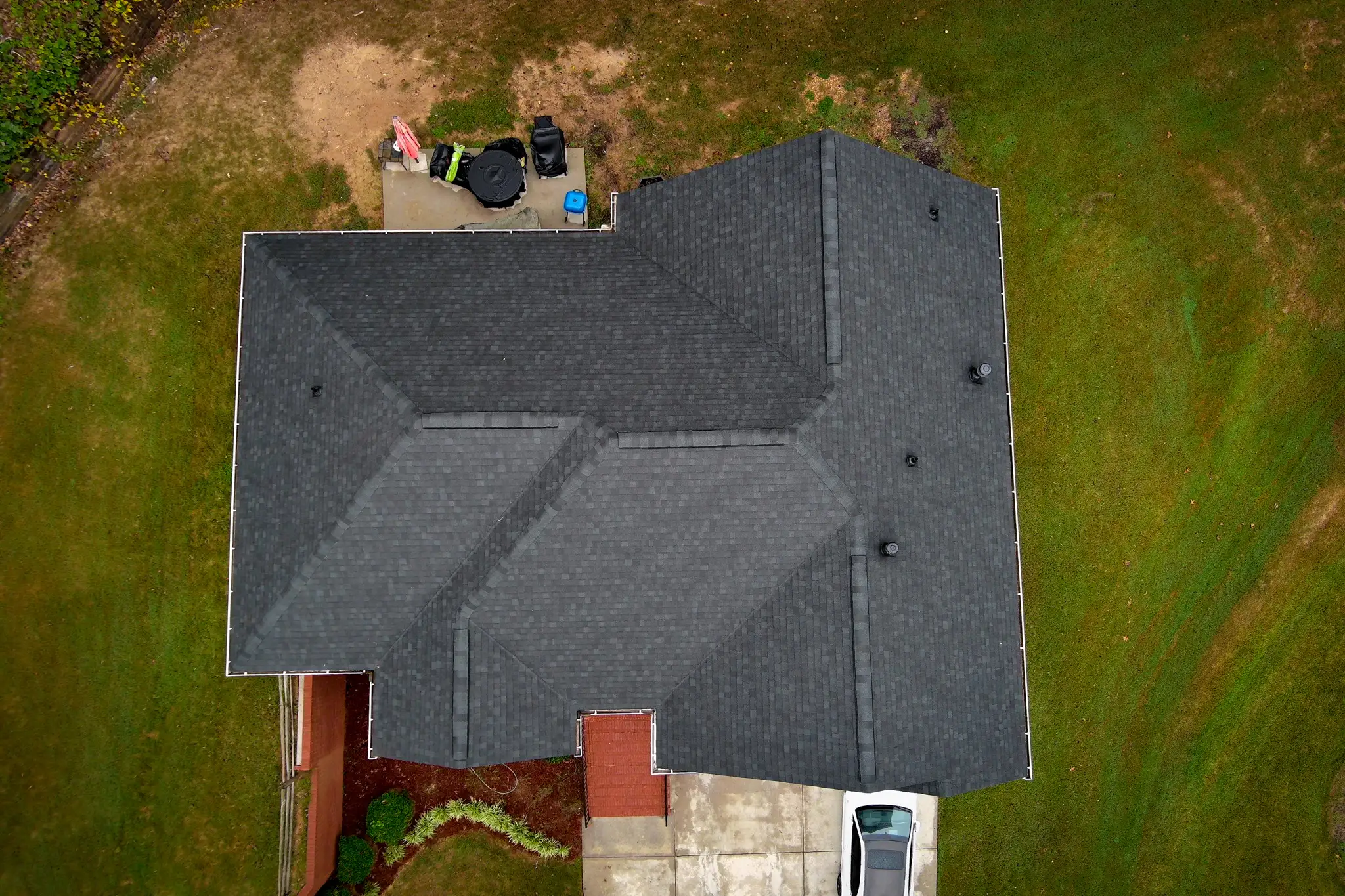
Most people only think about their roof when something goes wrong: a stain on the ceiling, shingles in the yard after a storm, or a roofer using words like “valley,” “fascia” and “step flashing.” This guide walks through the parts of a roof in plain English, with a labeled diagram, so you know what you’re looking at and what a roofer is talking about.
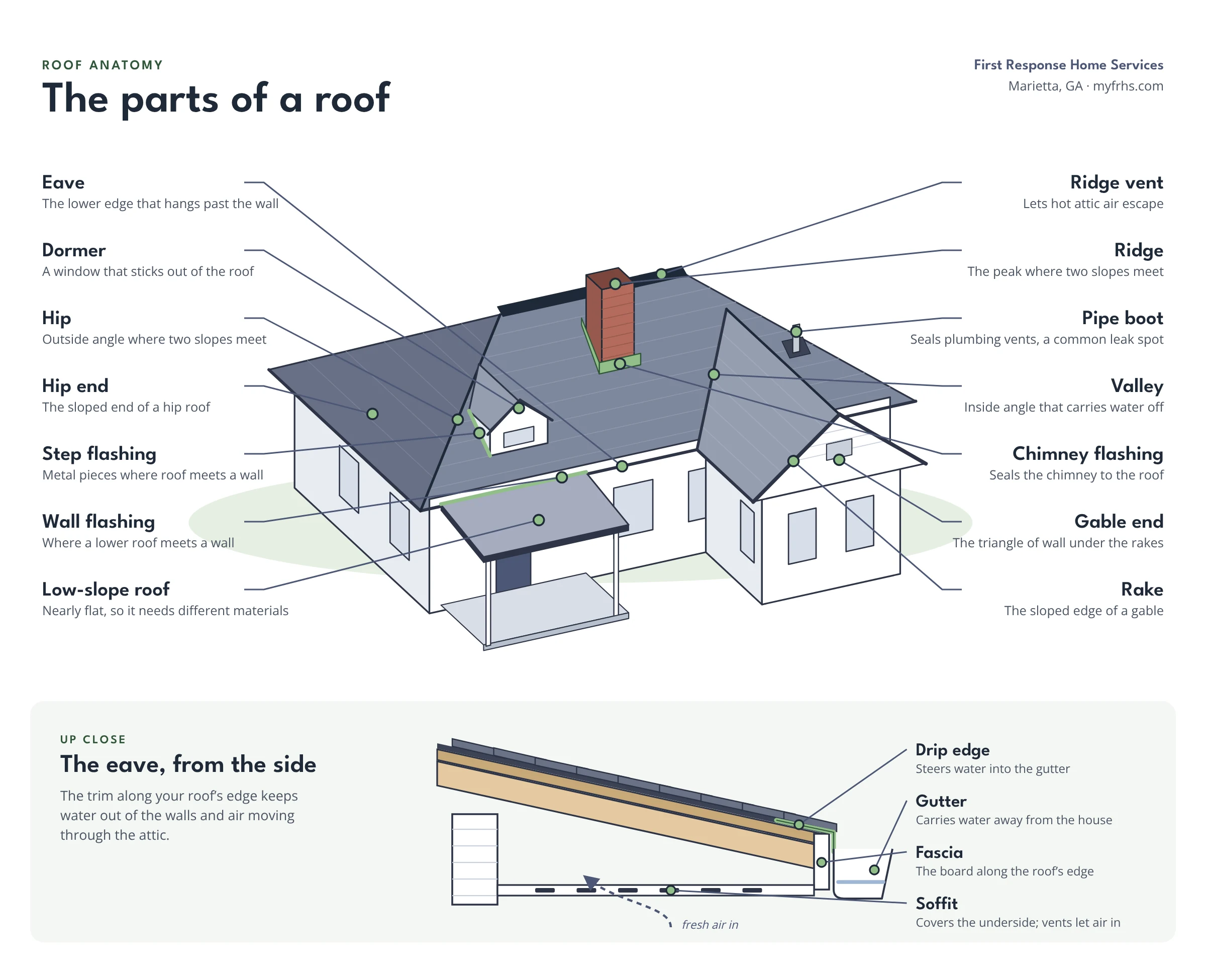
What are the parts of a roof called?
It’s easiest to think about a roof in three groups: the shape you see from the street, the trim along the edges, and the spots where the roof meets something else. That last group is where most leaks start.
The shape of the roof
- Ridge: the peak, where two roof slopes meet at the top.
- Ridge vent: a low vent that runs along the ridge and lets hot, damp air escape from the attic.
- Hip: the outside angle where two slopes meet and run down toward a corner of the house.
- Hip end: the sloped end of a hip roof. A hip roof slopes on all four sides.
- Gable end: the triangle of wall under the roof on a gable roof, which slopes on two sides.
- Rake: the sloped edge of the roof along a gable end.
- Eave: the lower edge of the roof that hangs out past the wall.
- Valley: the inside angle where two slopes meet. Valleys carry a lot of water, so they need extra protection.
- Dormer: a small structure with its own roof and a window that sticks out from the main roof.
- Low-slope roof: a section that’s nearly flat, often over a porch, carport or addition. Shingles aren’t made for very low slopes, so these areas need different materials.
The edges and trim
- Fascia: the board that runs along the edge of the roof, where the gutters attach.
- Soffit: the panel that covers the underside of the eave. Vented soffits let fresh air into the attic.
- Drip edge: metal trim along the eaves and rakes that steers water into the gutter instead of behind it.
- Gutters and downspouts: they carry water away from the roof edge, the walls and your foundation.
Where the roof meets something else
- Flashing: thin metal that seals the joints where the roof meets a wall, a chimney or a skylight.
- Step flashing: short, overlapping pieces of flashing along a wall that rises out of the roof, like the side of a dormer.
- Wall flashing (abutment): flashing where a lower roof, like a porch roof, runs into the wall of the house.
- Chimney flashing: flashing that wraps the base of the chimney and seals it to the roof.
- Pipe boots: rubber or metal collars that seal around plumbing vent pipes. The rubber dries out and cracks over time, which makes pipe boots one of the most common leak spots we find.
Roof layers: what’s under your shingles
A roof is more than shingles. It’s a system of layers, installed in a set order, and each one has a job. Here they are from the bottom up.
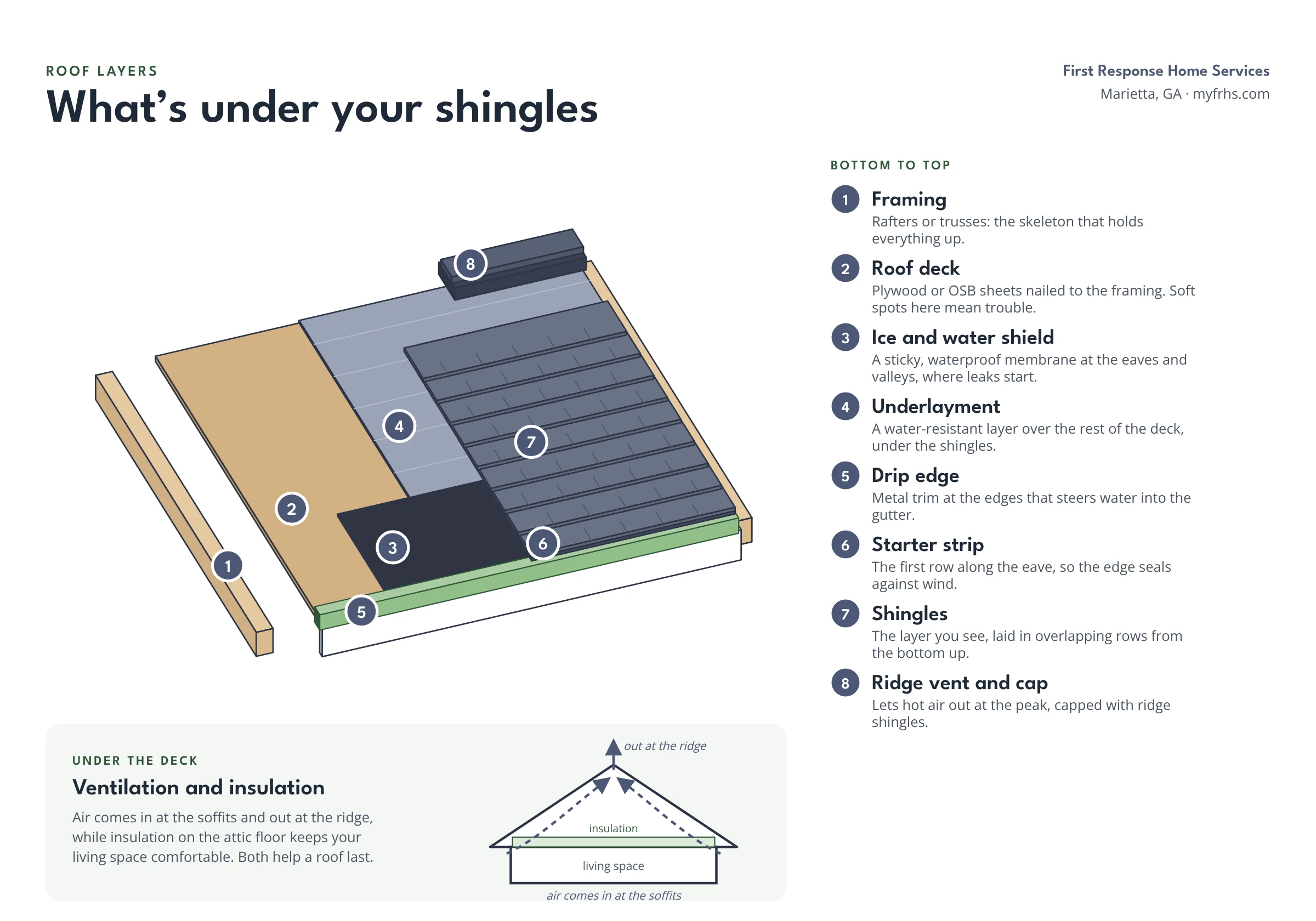
- Framing: the rafters or trusses that form the shape of the roof and hold everything up.
- Roof deck: plywood or OSB sheets nailed to the framing. Everything else is fastened to the deck, so rot or soft spots here have to be fixed before new shingles go on.
- Ice and water shield: a sticky, waterproof membrane that goes along the eaves, in valleys and around chimneys and other openings, where water is most likely to get in.
- Underlayment: a water-resistant layer that covers the rest of the deck. It’s a backup if water ever gets under the shingles.
- Drip edge: metal trim along the edges that keeps water off the fascia and moving into the gutter.
- Starter strip: the first row along the eaves. It gives the first row of shingles something to seal to, so wind can’t lift the edge.
- Shingles: the layer you see, laid in overlapping rows from the bottom up so water always runs over a seam, never into one.
- Ridge vent and ridge cap: the vent lets hot air out at the peak, and ridge cap shingles cover it and finish the top of the roof.
Ventilation and insulation
Two things under the deck matter as much as anything on top of it. Good ventilation pulls fresh air in at the soffits and lets hot, damp air out at the ridge. Insulation on the attic floor keeps that heat from reaching your living space. Together they help keep your attic drier, your energy bills lower and your shingles from aging early. A roof with poor ventilation can wear out years before it should.
The parts of a roof frame
Under the deck, most homes in the Marietta area are framed one of two ways.
- Rafters: sloped boards that run from the top of the wall up to a ridge board at the peak. Ceiling joists run across the house and tie the walls together, and collar ties connect pairs of rafters higher up so they don’t spread apart.
- Trusses: triangles built in a factory and set on the walls as one piece. Each truss has a top chord (the sloped part under the roof), a bottom chord (which doubles as the ceiling joist) and webs that brace the inside.
Either way, the ends of the rafters or trusses that stick out past the wall are called rafter tails. They hold up the eave, with the fascia nailed to their ends and the soffit underneath.
Can you replace part of a roof?
Often, yes. Many roof problems are one part failing while the rest of the roof is fine. Common repairs include:
- Replacing a cracked pipe boot
- Resealing or replacing flashing at a chimney, wall or skylight
- Replacing shingles that blew off in a storm
- Repairing a valley or a section of rotted deck
Replacing a whole section or one slope can make sense too, but it comes with trade-offs. New shingles rarely match older, weathered ones exactly. The new section and the old one will age differently. And if the rest of the roof is near the end of its life, you may end up paying for a second project a few years later.
The honest answer depends on how old the roof is and how widespread the problem is. That’s why we start with an inspection: we photograph what we find, show you the photos and explain whether a repair will hold or a replacement makes more sense. If something can safely wait, we’ll tell you that too. If storm damage is involved, we document it thoroughly; you file the claim with your insurance company.
What about the parts of a metal roof?
Metal roofs share the same basic structure: framing, a deck and underlayment underneath. On top, instead of shingles, they use long metal panels, held down with exposed screws or hidden clips, plus metal ridge caps, trim along the edges and foam closures that seal the gaps under the panel ribs. Most homes we work on in metro Atlanta have asphalt shingles, so that’s what this guide focuses on.
Frequently asked questions
What’s the most important part of a roof?
There isn’t just one. The shingles get the most attention, but flashing, the underlayment and good ventilation do just as much to keep water out and help the roof last. A roof is only as strong as its weakest spot.
Where do roofs leak most often?
Usually where the roof meets something else: around chimneys, along walls, at skylights, at pipe boots and in valleys. Leaks rarely start in the middle of a healthy slope.
Is the fascia part of the roof?
It’s part of the roof edge. The fascia board is attached to the ends of the rafters or trusses, and the drip edge and gutters attach to it. When it rots, it’s usually because water is getting behind the gutter or the drip edge.
What’s the difference between a hip roof and a gable roof?
A gable roof slopes on two sides and has a triangle of wall, the gable end, at each end. A hip roof slopes on all four sides, so there’s no gable wall. Many homes have both.
Does a roof inspection check all of these parts?
Ours does. We look at the shingles, flashing, pipe boots, valleys, vents, gutters, fascia and soffits, check the attic when we can, and photograph everything so you can see exactly what we see.
Want to know what shape your roof is in?
We’ll come out, walk the roof, photograph what we find and explain it in plain English. Estimates are free, and there’s no pressure to decide on the spot. Schedule your free roof estimate or call (404) 797-8115.
Want to keep reading? See how to tell when you need a roof leak repair, whether to repair or replace your roof, or learn about our roof inspections, roof repair and roof replacement.
Water coming in right now? Call (404) 797-8115 for emergency help.
Keep reading
More advice from Chase
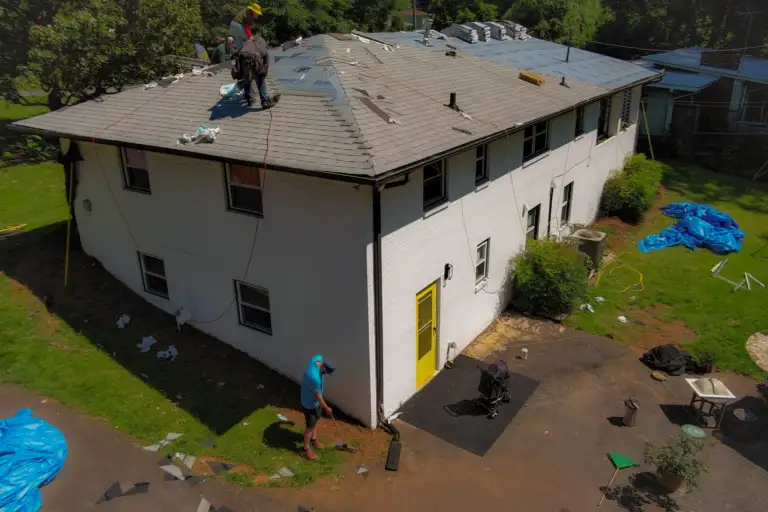
Is Roofing Considered a Skilled Trade in Marietta, GA?
Roofing is a highly skilled trade. Learn what training professional roofers in Marietta go through and why skill level directly impacts your roof's lifespan. (404) 797-8115.
Warning Signs a Marietta Roofing Contractor Isn’t Being Honest With You
Know the red flags before hiring a roofer in Marietta. Storm chasers, cash-only demands, and no-contract quotes — learn what to avoid. (404) 797-8115.
Start with a conversation
Schedule your free estimate
A few quick steps: what you need, where your home is and which days work. We'll call to confirm a time to come take a look.

You'll hear back from Chase directly, not a call center.
Prefer to talk? Call (404) 797-8115 or email info@myfrhs.com.
Roof emergency or storm damage? Call (404) 797-8115 for immediate assistance.